Fashion and Self-Image: What You Wear Shapes How You See Yourself
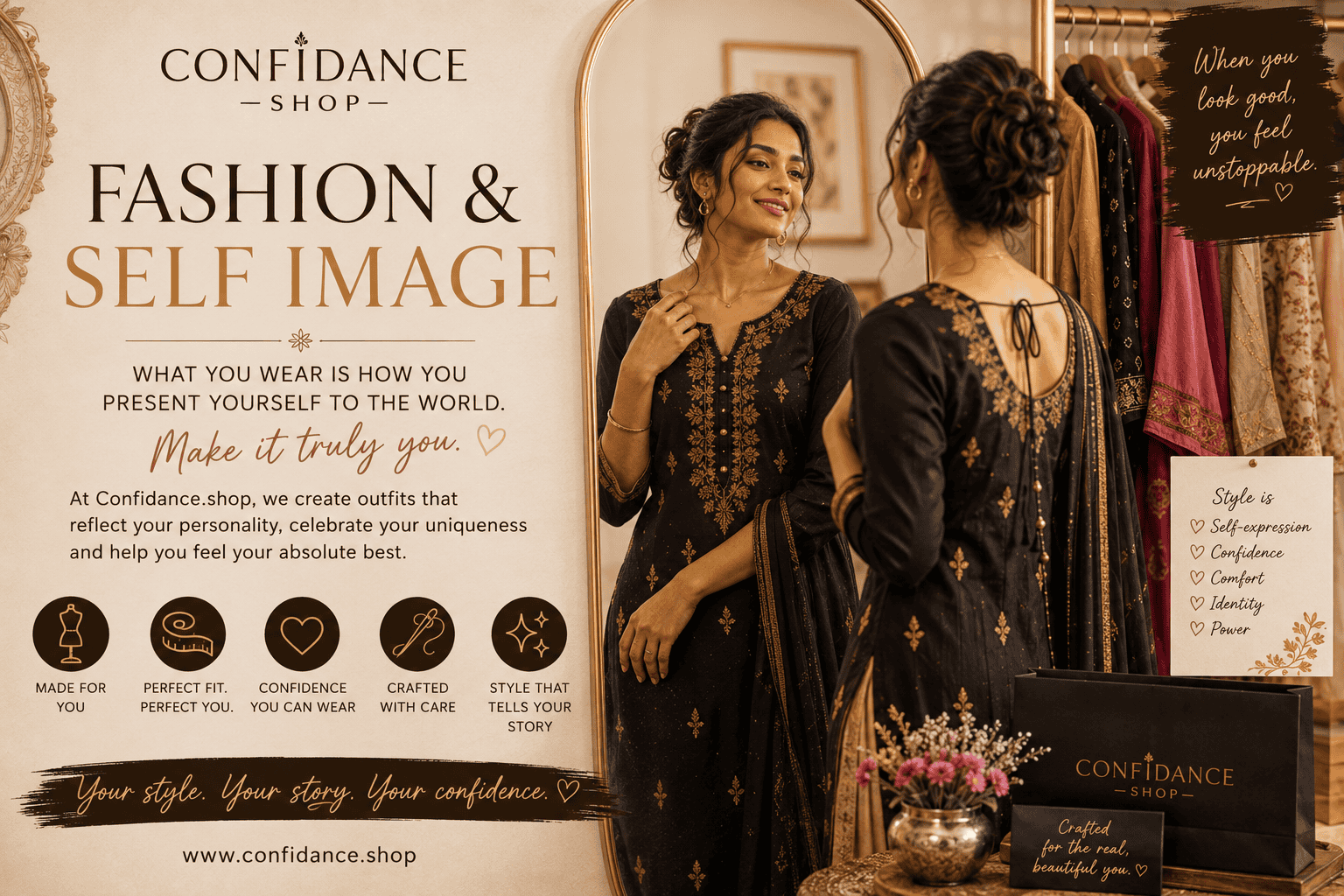
Fashion is often treated like something external—trends, fabrics, colours, aesthetics. But in reality, it sits much closer to identity than we admit. What you wear doesn’t just change how others perceive you. It quietly rewires how you perceive yourself.
At the heart of confidance.shop lies a simple idea: clothing is not just about appearance—it’s about self-image.
Fashion is the First Layer of Identity
Before you speak, before you act, before you even enter a room—your clothing has already started a conversation for you. But more importantly, it starts a conversation inside you.
A well-chosen outfit does something subtle but powerful:
- It changes posture
- It alters movement
- It influences tone of voice
- It affects decision-making
This is not imagination. It’s psychology. The brain constantly updates identity based on feedback loops—and clothing is one of the strongest visual feedback systems we engage with daily. When you dress with intention, you don’t just “look better.” You behave differently.
Self-Image: The Silent Driver of Confidence
Self-image is not what you are. It’s what you believe you are.
Two people can have the same body, same face, same environment—but completely different confidence levels because their internal narrative differs. Fashion becomes a tool that either reinforces or rewrites that narrative.
- Oversized, careless dressing often reinforces “I don’t want to be seen.”
- Structured, intentional clothing reinforces “I belong here.”
- Expressive outfits reinforce “I am allowed to take space.”
Over time, these micro-messages accumulate into identity. That’s why confidence is rarely built in one big moment. It is built in thousands of small dressing decisions.
Dopamine Dressing and Emotional Identity
There is a reason certain outfits make you feel “on.” It’s not just aesthetics—it’s emotional conditioning. This is often called dopamine dressing, where clothing is used to intentionally trigger positive emotional states. But beyond trends, it is really about alignment: wearing something that matches how you want to feel, not just how you currently feel.
For example:
- You feel uncertain → you choose structured silhouettes → your mind stabilizes
- You feel low energy → you choose brighter tones → your emotional state lifts
- You feel invisible → you choose defined, expressive clothing → you feel seen
Fashion becomes emotional engineering. Not fake confidence—but activated confidence.
The Problem with Trend-Driven Identity
Modern fashion culture often pushes people to copy rather than construct identity. But copying style without understanding self-image leads to a disconnect:
- You look “good” but don’t feel like yourself
- You wear trends but don’t own them
- You dress for validation instead of expression
This creates fragile confidence—one that depends on external approval. True self-image based dressing works differently. It asks: “Does this outfit represent who I am becoming?” .Not who Instagram says you should be.
Clothing as a Mirror of Inner Evolution
Your wardrobe is often a timeline of your internal evolution.
Think about it:
- Past versions of you had different colours, fits, and comfort zones
- Growth often shows up first in clothing before behaviour
- Identity shifts are often visible before they are verbalized
This is why fashion can be a powerful self-development tool. When you intentionally upgrade your wardrobe, you are not just changing style—you are signalling to your mind that a new identity is forming.
Building Confidence Through Intentional Dressing
If fashion shapes self-image, then confidence is not random—it is designed.
Here are foundational principles:
1. Dress for alignment, not approval
Stop asking “Will people like this?” Start asking “Does this feel like me?”
2. Define your visual identity language
Minimal, bold, soft, structured, rebellious—clarity creates consistency.
3. Repeat what works
Confidence grows from familiarity. Build a core wardrobe that feels like “you.”
4. Use clothing as emotional calibration
Don’t wait to feel confident—dress in a way that activates it.
The ConfidAnce Perspective
At its core, confidance.shop is not just about clothing—it is about identity construction. Fashion is not decoration. It is participation in how you show up in your own life.
- When self-image is weak, clothing becomes noise.
- When self-image is clear, clothing becomes language.
And confidence? It is simply the by-product of that clarity. You don’t “find” confidence and then dress accordingly. You build confidence by repeatedly choosing clothing that reinforces the version of yourself you are becoming. Because in the end, fashion doesn’t seek attention. It helps you see yourself differently first.