Types of Sleeves for Women: A Complete Guide to Sleeve Styles
Sleeves are an important part of a garment’s design. They influence its appearance, comfort, movement and overall silhouette. From simple short sleeves to dramatic bell sleeves, the right design can transform an outfit and make it more suitable for everyday wear, festive celebrations or special occasions.
Understanding the different types of sleeves can help you choose clothing that reflects your personal style. Whether you are selecting a designer blouse for a saree, a kurta for everyday use or a contemporary ethnic outfit, factors such as sleeve length, fabric, fit and occasion can help you find a suitable design.
At Confidance.shop, we believe that thoughtful design makes clothing more personal. If customisation is available for your chosen garment, adjusting details such as sleeve length, width and finishing can help you create a look that suits your preferences.
In this guide, we explore popular sleeve types, their key features, suitable fabrics and how to choose sleeve designs for women, including designer blouses and ethnic wear.
Why Sleeve Design Matters
Sleeves contribute to both the style and functionality of a garment. A well-chosen sleeve can complement the neckline, highlight decorative details and provide the level of coverage you prefer.
Here are some important factors to consider when selecting a sleeve design:
Comfort: Sleeve width and armhole fit can affect how easily you move.
Appearance: Different sleeve shapes create different visual effects.
Occasion: Simple sleeves may suit daily wear, while decorative styles can complement festive outfits.
Fabric: Lightweight fabrics drape differently from structured materials such as brocade.
Personal preference: Your preferred coverage, fit and style should guide your choice.
Considering these elements before selecting a garment can help you balance appearance and practicality.
Common Types of Sleeves by Length
Sleeve length is one of the first things to consider when choosing a blouse, dress or kurta. Each option offers a different combination of coverage and style.
1. Sleeveless
Sleeveless garments leave the arms uncovered and provide a clean, open appearance. They are often chosen for warm weather and contemporary outfits.
Suitable for:
Summer dresses and tops
Modern ethnic outfits
Layered looks
Contemporary blouse designs
When selecting a sleeveless blouse, pay attention to the armhole fit and shoulder coverage to ensure the garment feels comfortable.
2. Cap Sleeves
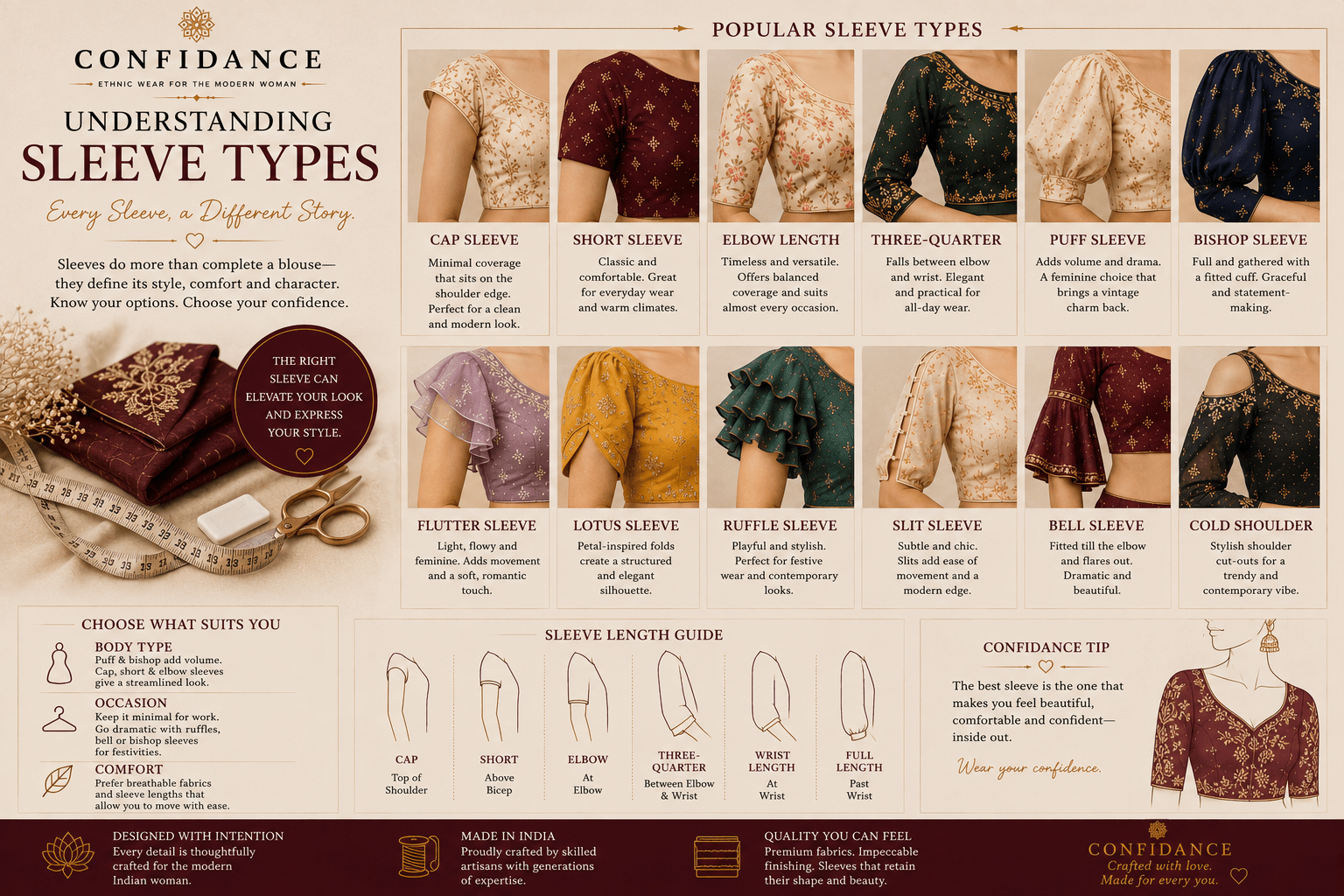
Cap sleeves provide short coverage over the top of the shoulder. They are typically small and fitted, making them a subtle alternative to sleeveless designs.
Suitable for:
Lightweight dresses
Casual kurtas
Simple ethnic blouses
Minimalist outfits
Cap sleeves work well when you want a small amount of shoulder coverage without adding much fabric.
3. Short Sleeves
Short sleeves generally end above the elbow. Their simple construction makes them a versatile choice for everyday clothing.
Suitable for:
Cotton blouses
Everyday kurtas
Casual dresses
Office and daytime outfits
Short sleeves are especially practical when ease of movement and a straightforward design are priorities.
4. Elbow-Length Sleeves
Elbow-length sleeves extend to approximately the elbow. They are popular in traditional Indian clothing because they provide additional coverage while leaving the lower arm free.
Suitable for:
Designer blouses for sarees
Festive kurtas
Traditional outfits
Blouses with embroidered borders
An embroidered cuff or decorative sleeve hem can add detail without making the entire garment look overly elaborate.
5. Three-Quarter Sleeves
Three-quarter sleeves extend below the elbow but stop before the wrist. They offer a balanced option for people who prefer more coverage than short sleeves provide.
Suitable for:
Everyday ethnic wear
Office clothing
Cotton kurtas
Contemporary blouse designs
These sleeves can work across different seasons, depending on the fabric and local weather. Their versatility makes them a practical choice for many wardrobes.
6. Full Sleeves
Full sleeves extend to the wrist and provide the greatest coverage among the common sleeve lengths discussed here.
Suitable for:
Formal and festive outfits
Embroidered blouses
Contemporary ethnic clothing
Structured dresses and kurtas
Full sleeves can feature simple cuffs, fitted finishes or decorative embroidery. The right construction depends on the fabric, desired appearance and ease of movement.
Popular Sleeve Styles and Designs
Sleeve length describes how far a sleeve extends along the arm, while sleeve style describes its shape and construction. Understanding this difference makes it easier to compare designs.
1. Straight Sleeves
Straight sleeves maintain a relatively consistent width from the upper arm towards the wrist or cuff.
Key features:
Simple, streamlined appearance
Easy to pair with different necklines
Suitable for everyday and formal garments
Compatible with many fabrics
Straight sleeves are a useful option when you want the fabric, neckline or embroidery to remain the main visual feature of your outfit.
2. Puff Sleeves
Puff sleeves feature gathered fabric that creates volume around the shoulder or upper arm. The amount of fullness can vary from a subtle puff to a more dramatic shape.
Key features:
Noticeable volume near the shoulder or upper arm
A vintage-inspired appearance
Options for short, elbow-length and longer versions
Puff sleeves can complement contemporary dresses and designer blouses. Lighter fabrics often create a softer puff, while fabrics with more structure can maintain a more defined shape.
3. Bell Sleeves
Bell sleeves gradually widen towards the lower arm, creating a flared shape that resembles a bell.
Key features:
A wider opening towards the hem
Movement and flow
Options for subtle or dramatic flares
Bell sleeves are often used in contemporary ethnic wear, occasion dresses and statement blouses. They work particularly well when the flare has enough room to move without interfering with other garment details.
4. Bishop Sleeves
Bishop sleeves are fuller through the arm and gathered or fitted at the wrist, commonly with a cuff. They create a soft, flowing silhouette.
Key features:
Fullness along the arm
A gathered or fitted wrist finish
A more defined cuff than many bell sleeves
Bishop sleeves can be attractive in lightweight fabrics that drape naturally. For formal or festive garments, a carefully designed cuff can provide a neat finish.
5. Balloon Sleeves
Balloon sleeves have a rounded, voluminous shape, usually created by gathering fabric at the sleeve openings or other points along the sleeve.
Key features:
Noticeable volume
A rounded silhouette
A fashion-forward appearance
Balloon sleeves can add visual interest to modern ethnic outfits and statement tops. Their proportions should be balanced with the rest of the garment to avoid unnecessary bulk.
6. Raglan Sleeves
Raglan sleeves extend towards the neckline, with diagonal seams running from the neck area to the underarm instead of a conventional shoulder seam.
Key features:
A distinctive diagonal seam
A different shoulder construction
Potentially greater movement when properly fitted
Raglan sleeves are commonly associated with casual and sporty clothing, but variations can also be used in relaxed contemporary designs.
7. Flutter Sleeves
Flutter sleeves are generally short and loose, with fabric that falls or flutters around the upper arm. They may be cut in curved or flared shapes.
Key features:
Soft, flowing movement
A lightweight appearance
Minimal restriction around the arm
Flutter sleeves are suitable for summer dresses, lightweight kurtas and some contemporary ethnic garments.
8. Slit Sleeves
Slit sleeves include an opening along part of the sleeve, which may reveal the arm or show an underlying fabric layer.
Key features:
A slit or opening along the sleeve
Decorative or contemporary detailing
Options for different sleeve lengths
Slit sleeves can work well in occasion wear and designer blouses. The slit placement and finishing should be designed to provide comfortable movement and appropriate coverage.
9. Kimono Sleeves
Kimono sleeves are cut as an extension of the garment’s body rather than being attached through a conventional set-in shoulder seam. Their shape can create a relaxed silhouette.
Key features:
An integrated sleeve and body construction
A relaxed fit in many designs
A distinctive, flowing appearance
Kimono sleeves can suit loose-fitting tops, tunics and contemporary ethnic clothing. Their fit depends on the pattern, fabric and intended garment shape.
10. Dolman or Batwing Sleeves
Dolman sleeves have a deep armhole and a wide section of fabric extending from the body. Batwing sleeves are a closely related style often characterised by a dramatic, wing-like shape.
Key features:
Extra fabric around the underarm
A relaxed silhouette
A distinctive shape when the arms are extended
These sleeves can suit relaxed tops, tunics and modern fusion outfits. Because the fabric gathers around the underarm, the overall pattern should allow comfortable movement.
Which Sleeve Designs Work Best for Designer Blouses?
Blouse sleeve designs can change the appearance of a saree outfit, even when the saree and blouse fabric remain the same. The most suitable option depends on the blouse’s neckline, fabric, embroidery, fit and the occasion.
Sleeves for Traditional Sarees
For traditional outfits, elbow-length and three-quarter sleeves are versatile options. Simple straight sleeves can keep the look understated, while embroidered borders can add detail.
For brocade or silk blouses, consider how much structure the fabric naturally provides before selecting a highly gathered or voluminous design.
Sleeves for Festive and Wedding Blouses
Puff sleeves, decorative full sleeves and statement elbow-length sleeves can complement festive outfits. Embroidery, zari work or carefully placed embellishments can add interest, provided they work with the rest of the blouse design.
For heavily decorated garments, a simpler sleeve shape may create a more balanced appearance.
Sleeves for Contemporary Blouses
Flutter, slit and selected bell-sleeve designs can introduce a modern element to contemporary ethnic outfits. The overall proportions matter: a dramatic sleeve may pair best with a relatively simple neckline or fewer competing decorative details.
Sleeves for Cotton Blouses
Cotton blouses often work well with short, elbow-length and three-quarter sleeves. The fabric weight, weave and lining can affect the final fit and appearance.
For everyday wear, consider ease of movement, sleeve width and how the fabric feels against your skin.
Explore the relevant collection: Add an internal link here to Confidance.shop’s actual designer blouse category, if available. If cotton and brocade blouses have separate category pages, link to them from the corresponding sections.
Sleeve Styles Compared: How to Choose
The following comparison can help you narrow down the options.
| Sleeve style | Appearance | Consider for |
|---|---|---|
| Straight | Clean and streamlined | Everyday, office and formal wear |
| Puff | Gathered volume | Statement blouses and dresses |
| Bell | Flared towards the hem | Contemporary and festive outfits |
| Bishop | Full arm with gathered cuff | Flowing, elegant garments |
| Balloon | Rounded volume | Fashion-forward outfits |
| Flutter | Light and flowing | Summer and lightweight clothing |
| Raglan | Diagonal shoulder seams | Relaxed garments |
| Slit | Sleeve opening | Contemporary and occasion wear |
| Kimono | Integrated, relaxed sleeve | Tunics and loose-fitting outfits |
| Dolman or batwing | Wide, relaxed underarm | Relaxed tops and fusion wear |
These are general styling suggestions rather than strict rules. The best design also depends on the garment’s cut, fabric and your personal preferences.
How Fabric Affects Sleeve Design
Fabric affects the way sleeves hang, hold their shape and move. Before choosing a design, consider the material’s weight, flexibility and texture.
Lightweight Fabrics
Muslin, lightweight cotton and other soft fabrics can work well for flutter, bishop and bell sleeves. Their drape can help create movement without requiring a large amount of fabric.
Medium-Weight Fabrics
Many cotton and linen fabrics can suit straight, short, elbow-length and three-quarter sleeves. The final result depends on the particular weave, thickness and construction.
Brocade and Heavier Silk
Brocade and heavier silk can provide structure for defined sleeves and decorative borders. Depending on the material’s weight and stiffness, they may require a simpler sleeve pattern to avoid excessive bulk.
Embroidered and Embellished Fabrics
Embroidery, mirror work and zari detailing can influence sleeve weight and flexibility. Concentrating embellishments around the cuff or sleeve hem may create a different effect from covering the entire sleeve.
Always consider the garment as a whole, including the neckline, body fit and decorative details.
Sleeve Embroidery and Finishing Ideas
Sleeves can provide a useful space for decorative craftsmanship. The placement of embellishments can make a garment look understated or elaborate.
Popular finishing ideas include:
Embroidered sleeve hems
Decorative cuffs
Floral thread embroidery
Mirror-work accents
Zari borders
Contrasting fabric trims
Subtle piping and tailored finishes
When selecting embellishments for a designer blouse, consider their weight and how they may affect comfort around the arm. Decorative details should complement the overall outfit rather than compete with every other design element.
How to Choose the Right Sleeve Style
Choosing the right sleeve is easier when you consider several practical factors together.
1. Think About Comfort and Movement
Consider how freely you want to bend your elbows, raise your arms and carry out daily activities. Very fitted sleeves or restrictive cuffs may feel uncomfortable if the garment does not provide enough ease.
2. Consider the Occasion
For everyday wear, simple short, straight or three-quarter sleeves may be practical. For weddings and celebrations, decorative cuffs, embroidered sleeves or more elaborate shapes may suit the outfit.
3. Match the Sleeve to the Fabric
Lightweight fabrics can support flowing shapes, while structured fabrics may hold defined silhouettes. Test the combination when possible rather than choosing a sleeve style based on appearance alone.
4. Balance the Garment’s Details
Consider the neckline, print, embroidery and overall silhouette. If the garment already features extensive embellishment, a simpler sleeve may help maintain visual balance.
5. Choose Your Preferred Coverage
Sleeve length is a personal decision. Select the amount of coverage that feels comfortable and appropriate for your lifestyle and the occasion.
6. Check the Fit
Armhole depth, sleeve width, cuff size and seam placement all affect how a sleeve feels. If ordering a customised garment, confirm which measurements and design changes the seller can accommodate.
Can You Customise Sleeve Designs?
Customisation can help you adapt a garment to your preferences, but the available options depend on the product and seller.
If a garment supports customisation, possible adjustments may include:
Sleeve length
Sleeve width
Cuff shape
Decorative borders
Embroidery placement
Selected fit adjustments
Not every sleeve shape can be added to every garment without altering its pattern or construction. For example, a fitted sleeve and a voluminous bishop sleeve require different amounts of fabric and different finishing techniques.
Before ordering, check the available customisation options and confirm any measurement requirements.
Finding Your Style at Confidance.shop
At Confidance.shop, your choice of sleeve design can be one part of creating an outfit that reflects your personal style. When browsing the collection, consider how the sleeve shape works with the fabric, neckline, colour and occasion.
If customisation is offered for your selected item, review the available options before placing an order. You can also explore relevant blouse collections to compare different fabrics, silhouettes and decorative details.
Looking for your next designer blouse? Explore the relevant Confidance.shop blouse collection and choose a design that suits your preferences. Add a direct link to the appropriate collection or product page here.
Final Thoughts
Understanding the different types of sleeves makes it easier to choose garments that combine style, comfort and practicality. Straight sleeves offer a clean appearance, puff sleeves add volume, bell sleeves create a flare, and bishop sleeves bring fullness to the arm with a defined cuff.
For designer blouses and ethnic wear, the right choice depends on the fabric, neckline, sleeve length, occasion and amount of coverage you prefer. Paying attention to these details can help you select a garment that feels as good as it looks.
Whether you prefer simple everyday sleeves or more elaborate festive designs, focus on the fit, construction and overall balance of the outfit. When customisation is available, thoughtful adjustments can help make a garment more suitable for your individual needs.
Frequently Asked Questions About Sleeve Types
1. What are the most common types of sleeves?
Common sleeve types include straight, puff, bell, bishop, balloon, flutter, raglan, slit, kimono and dolman sleeves. These styles differ in their shape, construction and amount of fabric. The most suitable choice depends on the garment, fabric and your personal preferences.
2. Which sleeve length is suitable for everyday wear?
Short, elbow-length and three-quarter sleeves are practical options for many everyday outfits. However, the best length depends on the weather, the garment’s fit and the activities you need to perform.
3. Which sleeve designs are suitable for designer blouses?
Straight, puff, elbow-length, three-quarter and selected bell-sleeve designs can all work for designer blouses. Consider the saree, blouse fabric, neckline and embroidery before choosing a sleeve shape.
4. What is the difference between bell sleeves and bishop sleeves?
Bell sleeves widen towards the lower edge, creating a flared opening. Bishop sleeves have fullness along the arm and are generally gathered or fitted at the wrist with a cuff.
5. What is the difference between puff sleeves and balloon sleeves?
Puff sleeves typically feature gathered volume around the shoulder or upper arm. Balloon sleeves generally create a more rounded, voluminous shape through a larger section of the sleeve. The exact distinction varies by pattern and design.
6. Which fabrics are suitable for bell sleeves?
Lightweight fabrics can create a soft, flowing bell sleeve, while medium-weight fabrics may produce a more defined flare. The best fabric depends on how much structure, movement and volume you want.
7. Are three-quarter sleeves suitable for ethnic wear?
Yes. Three-quarter sleeves are commonly used in kurtas and designer blouses because they provide coverage while leaving the wrist area free. Their suitability depends on the outfit, fabric and desired fit.
8. How do I choose sleeve designs for a silk or brocade blouse?
Consider the fabric’s weight, stiffness and embellishments. Straight, elbow-length or structured sleeves can work well with many brocade fabrics, while other designs may suit softer silks. The final choice depends on the material and the garment’s construction.
9. Can sleeve designs be changed when ordering a blouse?
That depends on the seller’s customisation policy and the particular product. Check the product page or contact the seller to confirm whether sleeve length, shape, cuff or other details can be modified.
10. How do I choose between short sleeves and full sleeves?
Consider your preferred coverage, comfort, the occasion, weather and overall outfit design. Short sleeves may suit warm weather and everyday clothing, while full sleeves can provide additional coverage and a different visual effect.
11. Do sleeve styles affect the comfort of a garment?
Yes. Sleeve width, armhole depth, cuff tightness, fabric and seam placement can all influence comfort and movement. A well-constructed sleeve should allow the wearer to move naturally without unnecessary pulling or restriction.
12. Can embroidery be added to blouse sleeves?
Embroidery can be incorporated into many blouse designs, depending on the fabric and construction. Sleeve hems, cuffs and selected motifs are common placement options. Confirm the available design and customisation options before ordering.https://www.amazon.in/Clothing-Accessories-confidAnce/s?rh=n%3A1571271031%2Cp_4%3AconfidAncehttps://confidance.shop/