Garment Construction: The Foundation of Well-Made Clothing
When shopping for clothes, it is easy to focus on colours, prints, fabrics, or embroidery. However, while these elements influence a garment’s appearance, its true quality often depends on what happens beneath the surface—its garment construction.
Garment construction is the process of transforming fabric into a finished piece of clothing through careful pattern making, cutting, stitching, seam construction, finishing, and detailing. These often-unseen techniques influence how a garment fits, feels, moves, and performs over time.
Even a beautifully designed outfit can lose its appeal when it is poorly constructed. In contrast, a simple garment can become a long-lasting wardrobe favourite when it is made with precision and care.
At Confidance.shop, we believe exceptional clothing begins with thoughtful construction. By combining careful craftsmanship with attention to detail, every custom-made garment is designed to provide comfort, durability, and a flattering fit.
What Is Garment Construction?
Garment construction refers to the techniques and processes used to transform fabric into a complete and well-finished piece of clothing. It involves much more than simply joining pieces of fabric together.
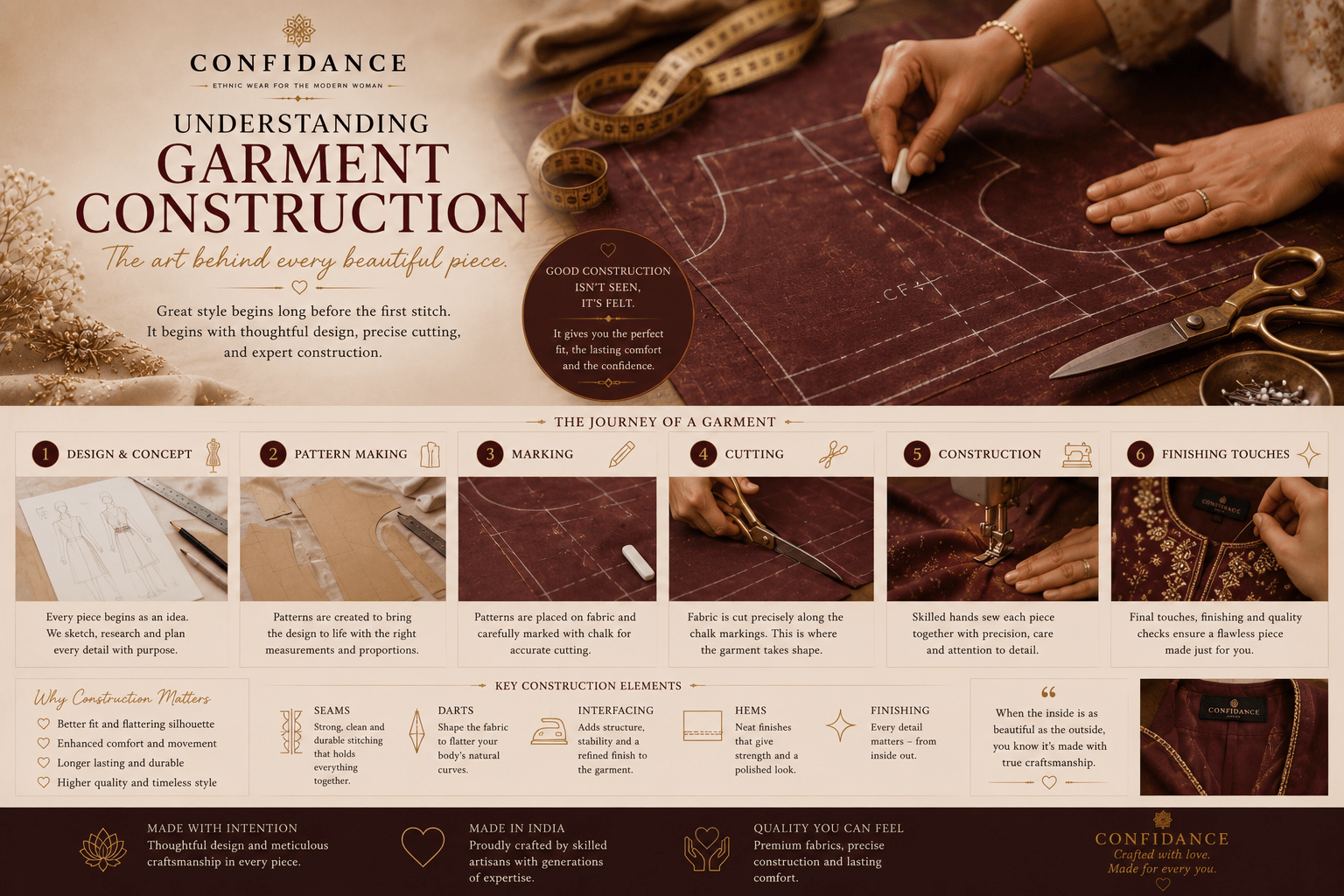
The garment construction process generally includes:
- Pattern making
- Fabric cutting
- Stitching
- Seam construction
- Neckline construction
- Sleeve attachment
- Lining placement
- Hem finishing
- Final quality checks
Pattern making and precise cutting establish the shape and structure of the garment. Stitching then joins the individual pieces together, while seam and hem finishing help improve durability and appearance.
Details such as sleeve attachment, neckline construction, and lining placement also contribute to the garment’s comfort and overall finish.
When each stage is completed carefully, the result is clothing that looks polished, fits better, feels comfortable, and maintains its quality through regular use.
Why Garment Construction Matters
Good garment construction may not always be immediately visible, but you can notice its difference every time you wear the garment.
A well-constructed garment can:
- Fit comfortably
- Maintain its shape
- Allow natural movement
- Provide better comfort
- Look polished from different angles
- Withstand regular wear
- Maintain its appearance over time
Poor construction, on the other hand, can result in twisted seams, uneven hems, loose stitching, uncomfortable sleeves, or clothing that loses its shape after repeated washing.
This is why construction quality should be considered alongside fabric, design, and appearance when choosing clothing.
Key Elements of Garment Construction
1. Pattern Making
Every well-made garment begins with an accurate pattern.
A pattern acts as the blueprint for the garment and determines its:
- Shape
- Proportion
- Fit
- Balance
Accurate pattern making ensures that the different parts of a garment come together correctly.
In custom tailoring, patterns can be adjusted according to individual body measurements, helping create a more personalised fit.
2. Precision Cutting
Accurate cutting is an important part of the garment construction process.
Even high-quality fabric cannot compensate for inaccurate cutting. Each fabric piece needs to be cut carefully while considering:
- Grain direction
- Fabric stretch
- Pattern placement
- Design symmetry
Precision cutting helps the finished garment maintain its intended shape and allows the fabric to hang naturally.
3. Quality Stitching
Stitching is one of the most important parts of clothing construction.
Strong and neat stitching connects the garment pieces while helping them withstand regular use.
Quality stitching contributes to:
- Durability
- Smooth seams
- Comfort
- A clean appearance
- Long-term performance
At Confidance.shop, careful stitching is an important part of creating garments that combine style with lasting quality.
4. Seam Construction
Seams connect individual fabric pieces to form a complete garment.
Well-constructed seams should:
- Lie flat
- Feel comfortable
- Remain secure
- Maintain their shape
- Blend naturally with the garment design
Poorly constructed seams can cause puckering, discomfort, unevenness, or premature wear.
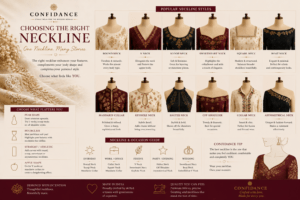
5. Neckline Construction
The neckline frames the face and can significantly influence the appearance of an outfit.
Proper neckline construction helps ensure that the neckline:
- Lies flat
- Maintains its shape
- Feels comfortable
- Complements the garment design
Whether you choose a round neck, V-neck, boat neck, or square neckline, careful construction and finishing can create a cleaner, more polished appearance.
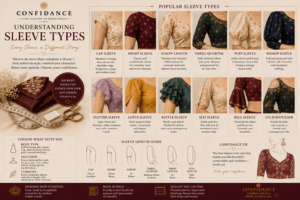
6. Sleeve Attachment
Sleeves should allow natural arm movement without unnecessary pulling or restriction.
Proper sleeve construction can provide:
- Comfortable mobility
- Balanced proportions
- Smooth shoulder lines
- Better fit
- Clean finishing
Correct sleeve attachment contributes to both the comfort and appearance of a garment.
7. Linings
Although linings are often hidden, they can play an important role in garment construction.
Depending on the garment, a suitable lining can provide:
- Improved comfort
- Additional structure
- Better durability
- Smoother drape
- Reduced transparency
The choice of lining should complement the fabric and intended design of the garment.
8. Hem Finishing
A clean and even hem is an important sign of quality craftsmanship.
Good hem finishing helps:
- Prevent fraying
- Maintain an even appearance
- Improve durability
- Preserve the garment’s shape
Whether it is a blouse, kurta, or dress, a neatly finished hem contributes to a polished overall appearance.
How Garment Construction Affects Fit
Many people assume that fit depends entirely on body measurements. However, garment construction also plays an important role.
Even accurate measurements cannot compensate for:
- Incorrect sleeve placement
- Poor neckline finishing
- Uneven seams
- Incorrect garment balance
- Inconsistent stitching
Thoughtful construction allows different measurements and garment components to work together properly.
This becomes particularly important in custom clothing, where construction can be adapted to the wearer’s measurements and preferred fit.
Garment Construction and Comfort
Comfort depends on more than the fabric used to make a garment.
Well-constructed clothing can support:
- Natural movement
- Reduced pulling
- Less bunching
- Better flexibility
- Comfortable wear for longer periods
Proper construction is especially important for garments that are worn for several hours at a time.
Garment Construction and Durability
Quality clothing should be able to withstand regular use.
Good construction can help garments:
- Retain their shape
- Resist loose seams
- Handle repeated wear
- Maintain a polished appearance
- Remain comfortable over time
This makes quality garment construction an important consideration when choosing clothing that you want to wear repeatedly.
Signs of a Well-Constructed Garment
Before purchasing clothing, check for signs of careful construction.
Look for:
- Straight and even stitching
- Secure seams
- Balanced sleeves
- Symmetrical design
- Smooth necklines
- Clean hems
- Neatly finished interiors
- Properly aligned patterns
- Comfortable fit
These details can help you distinguish carefully constructed clothing from garments where less attention has been given to finishing.
Why Garment Construction Matters in Custom Clothing
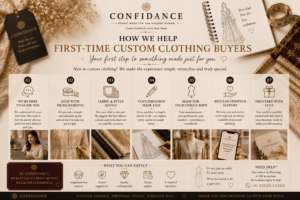
Custom tailoring involves more than simply taking measurements.
Custom garment construction can take into account:
- Individual body shape
- Measurements
- Fabric type
- Design preferences
- Desired silhouette
- Comfort requirements
This personalised approach allows construction techniques to be adapted to the specific garment and wearer.
At Confidance.shop, each custom garment is thoughtfully constructed with attention to the relationship between the fabric, design, fit, and wearer.
How Confidance.shop Prioritises Craftsmanship
At Confidance.shop, garment construction is an important part of creating quality clothing.
Each garment is carefully considered with attention to:
- Precision cutting
- Expert stitching
- Balanced proportions
- Quality finishing
- Comfortable fit
- Durable construction
By bringing together quality fabrics, skilled tailoring, and thoughtful design, Confidance.shop focuses on creating clothing that looks refined while remaining comfortable to wear.
Final Thoughts on Garment Construction
Beautiful clothing is about more than attractive fabrics, colours, or intricate embroidery. The quality of a garment also depends heavily on its construction—the craftsmanship that influences how well it fits, feels, moves, and performs over time.
Understanding garment construction can help you recognise the difference between clothing that simply looks attractive and clothing that is carefully made for comfort and durability.
From pattern making and precision cutting to stitching, neckline construction, sleeve attachment, and finishing, every stage contributes to the final result.
At Confidance.shop, we believe exceptional clothing begins with precision, care, and attention to detail. Thoughtful construction combined with quality materials and personalised tailoring helps create garments designed around comfort, style, and individual preferences.
Frequently Asked Questions About Garment Construction
1.What is a fashion mannequin used for in garment construction?
A fashion mannequin, also known as a dress form, is used to develop, shape, and evaluate garments during the garment construction process. Designers and tailors can use it to drape fabric, check proportions, develop patterns, and assess how a garment will look and fit before final stitching.
2.What are the best pattern making and garment construction books for fashion designing?
Pattern making and garment construction books can be useful for learning the fundamentals of fashion design, including measurements, drafting, fabric cutting, stitching, fitting, and finishing. When choosing a book, look for one that includes clear illustrations, practical examples, pattern-drafting techniques, and step-by-step garment construction instructions.
3.What is a garment construction book?
A garment construction book is an educational resource that explains how clothing is designed and assembled. It may cover topics such as pattern making, fabric preparation, cutting, stitching, seams, sleeves, necklines, closures, fitting, and finishing techniques.
4.What does garment construction mean?
Garment construction means the process of turning fabric and design ideas into a finished piece of clothing. It involves several stages, including pattern making, fabric cutting, stitching, seam construction, fitting, and finishing.
5.What is garment construction in fashion designing?
Garment construction in fashion designing is the practical process of converting a fashion design or pattern into a finished garment. It involves selecting suitable construction techniques, preparing patterns, cutting fabric accurately, assembling the garment, and completing the necessary finishing details.
6.Why is a fashion mannequin important in garment construction?
A fashion mannequin helps designers and tailors visualise and develop garments on a three-dimensional form. It can be particularly useful for draping, checking garment proportions, testing design details, and evaluating the overall shape before completing the garment.
7.What should a garment construction book teach?
A useful garment construction book should ideally explain the complete process, from pattern making and fabric cutting to stitching, fitting, seam finishing, and final garment completion. Books with diagrams and practical examples can make these techniques easier for beginners to understand.